Outer Banks septic guide
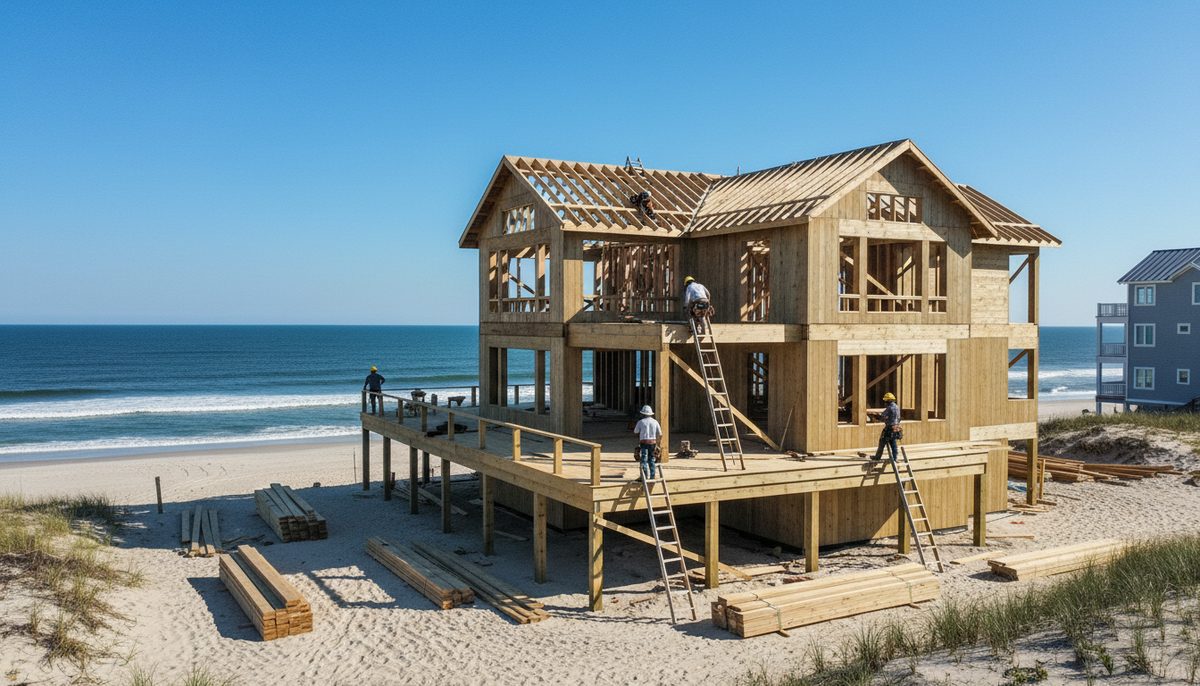
How far back from the ocean do you have to build?
The oceanfront setback is not one distance — it is erosion-rate math anchored to the vegetation line: 60 feet or 30x under 5,000 sq ft, 120 feet or 60x above, from a table that scales with the building.
The number is not a number — it is a calculation, and understanding the calculation is what lets you predict where on your own lot a house may stand. North Carolina does not tell every oceanfront lot to hold one fixed distance from the water. It measures each stretch of shoreline for what it is doing — growing, holding, or washing away — and it sets your buildable line from that measurement.
The details
Start with the anchor, because every distance is measured from the same mark: the first line of stable natural vegetation, not the high-tide line and not the dune crest. That vegetation line is the state's proxy for where the ocean's ordinary work stops and land begins, and it is resurveyed as the beach changes. A lot's buildable depth is therefore not a fixed asset — the line that anchored your setback when the lot sold may sit somewhere different by the time you build.
Then the math. Under the coastal rules at Oceanfront setback: 60 ft or 30x erosion rate, a new structure under 5,000 square feet must sit at least sixty feet landward of that vegetation line, or thirty times the local erosion-rate setback factor — whichever is greater. And the factor is not decorative: Minimum setback factor of 2 sets a minimum of two unless the shoreline is eroding at more than two feet per year, with the factors drawn from the state's fifty-plus-year average annual shoreline change rates. A stable beach and a wasting beach produce genuinely different buildable envelopes from the same rule.
The rule also scales with the building, which is the part nobody expects: Larger structures: 120 ft or 60x — structures of 5,000 square feet or more must be set back at least 120 feet or sixty times the factor, and the table graduates upward to 180 feet or ninety times the factor for structures of 100,000 square feet or more. The logic is explicit in the design of the table: the bigger and longer-lived the structure, the more shoreline it deserves in front of it, because the house has to outlive more years of a moving beach.
What this means for an oceanfront build is that the setback check comes before the floor plan. The measurement is taken from the lot's actual vegetation line with its actual local factor, not from a brochure's 'oceanfront building site', and a lot whose line has migrated may build smaller, differently, or further back than its history suggests. We run this math as part of the first site conversation — the setback envelope and the buildable footprint inside it are the same conversation.
Vegetation line, erosion factor, structure size — three inputs, one calculation, and it decides what your oceanfront lot can hold. Have us run it before the drawings start.
On the record: Oceanfront setback: 60 ft or 30x erosion rate (NC DEQ DCM — Oceanfront Construction Setback & Erosion Rates (deq.nc.gov, retrieved 2026-09-17)) · Larger structures: 120 ft or 60x (NC DEQ DCM — Oceanfront Construction Setback & Erosion Rates (deq.nc.gov, retrieved 2026-09-17)) · Minimum setback factor of 2 (NC DEQ DCM — Oceanfront Construction Setback & Erosion Rates (deq.nc.gov, retrieved 2026-09-17))
Hand-verified 2026-09-17 against the primary sources named above; where a fact could not be verified it was left out, never guessed.